
A Paris Notebook
On memories, beauty, and expectations. Plus some publishing news!

Cari amici,
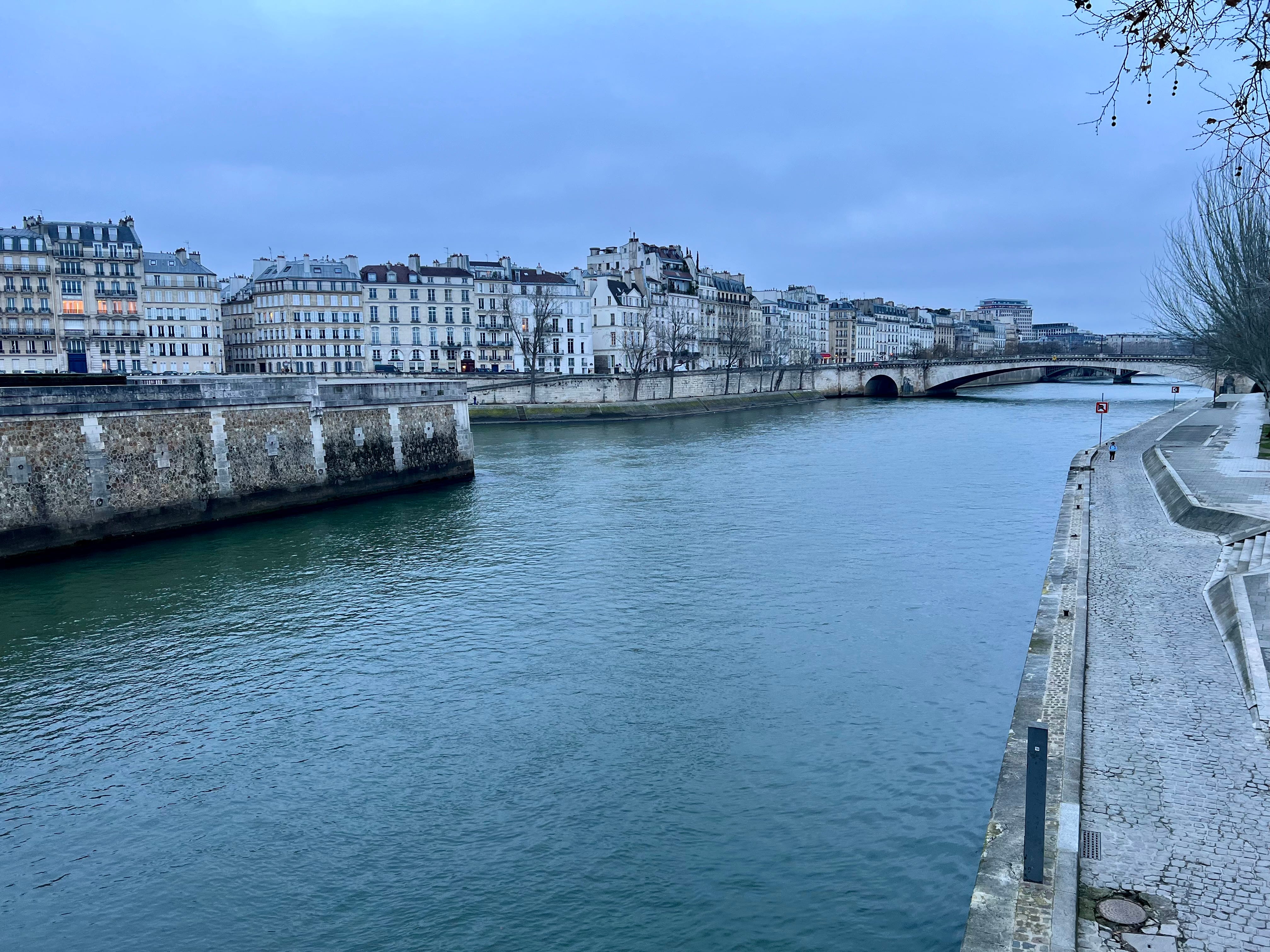
Four weeks after the death of my dog and two weeks since my trip to Paris, I’ve returned to normal life. I went to my language exchange group last Wednesday, the first time in a month due to my inability to fare due chiacchiere (have a chat) while flattened by grief.
As I announced at the scambio (exchange group), I had two pieces of news, one brutta, one bella. The brutta one you already know. (Damn, does the house still feel empty.) The bella news arrived several days later—Cynren Press will publish my second novel, How Long a Shadow, this November! Yes, that’s this year! That’s a super-fast turnaround. So I’ve been busy with a round of edits before sending my “final” manuscript to the publisher later this month, a chunk of publicity-related tasks, genesis chats about a book I’m co-authoring, and the last weeks of rehearsals for my theatre group’s performances (coming up in March).
Now, on to Paris. In 2003 my young teenage sons and I spent a week there. It was our first trip to Europe, and because it coincided with the U.S. bombing of Iraq, it was a pivotal experience for us, a series of meaningful firsts—seeing the U.S. from outside its borders, particularly at a time of heightened anti-American sentiment; discovering a culture and society not our own; experiencing the perspectives of people whose lives are shaped by a history that’s millennia-old.
More than 20 years later, a weeklong return to Paris with my older son (with a few guest appearances by his wife, who was there for work) was filled with sentiment—revisiting old haunts and monuments (the Latin Quarter, Notre-Dame, Saint-Chapelle), searching in vain for shops and cafes we recalled only vaguely, sharing memories of who we were back then and how the trip changed us.
A visit to Versailles
Memory is a persnickety beast, at times unreliable or kindly deceitful, at times indicative of the truth. When my son suggested we go to Versailles, I agreed, remembering little about it. (Proving, at least to me, how much photos bolster our memories; in those pre-smartphone days I took relatively few of them.) The palace itself has some beautiful rooms but overall comes across as dreary. Even the Hall of Mirrors, though lovely, didn’t knock my socks off. (What drew my eye most were some globe-shaped orange trees stationed at each window.) By the way, not to be all Italy-centric (which I am), there’s a “mini Hall of Mirrors” at the Galleria Doria Pamphilj in Rome, which I’d say is even prettier.


What I did photograph on my first visit to Versailles were the estate’s outlying buildings, the elegant Grand and Petit Trianon and the adorable Queen’s Hamlet, a working farm with fanciful buildings.


I’ll still take the Trianon estate and the Queen’s Hamlet over the Palace any day.
What Versailles has going for it, though, is a fascinating history. There, two of the three treaties of the Peace of Paris were signed in 1783, which ended the American Revolutionary War. There, King Louis XVI and his queen, Marie Antoinette, hunkered down in 1789 when the French Revolution broke out and thousands of marchers besieged the palace.1 It became Napoleon’s seat of power in 1804. And in 1919, the signing of the Treaty of Versailles ended World War I.
That said, Versailles isn’t nearly as impressive, in my book, as Reggia di Caserta, the 18th-century former royal palace of the Bourbon kings of Naples (and the largest former royal palace in the world), often called “the Versailles of Italy.”
The Reggia, on which construction began in 1752, has an elegant beauty that its French competitor, in my opinion, can’t compete with. It’s true that Versailles, which dates to 1631, came first. It’s also true that architect Luigi Vanvitelli looked to Versailles as a model in creating the kind of complex that would house a king, his court, and his government. But in terms of splendor and impact, it’s but a shadow, an echo, of the Reggia.


However. My complaints about Versailles aren’t intended to bash the French, oh no no no no. Because in Paris you will find the absurdly, ridiculously stunning …
Palais Garnier
… which is, all by itself, worth a trip to the City of Light. My God. This opera house, named for its architect, Charles Garnier, was built in the Napoleon III style over a roughly 15-year period beginning in 1861, by order of Emperor Napoleon III. Its ornate interior makes you gasp when all you’re looking at is the stairwell.


Up that massive stairway you’ll find the theater space with its dome by Chagall (added in 1964, when the artist was, apparently, a still-energetic 77-year-old), and room after room where people went, and likely still go, to see and be seen. The degree of opulence in these spaces matches one’s degree of social standing—or did, back in the day. Because you know, money and power mingling with the less well endowed—well, it just isn’t done.


The photos tell you everything you need to know about the Garnier’s over-the-top-yet-perfectly-imagined interiors, but for the architecturally curious among you, Wikipedia describes Napoleon III style as borrowing from Baroque, Palladian, and Renaissance styles. If you doubt the claim that this hybrid style leaves no space undecorated, note the cutie-pie lizard above, tucked into a nook on the staircase.
The Palais Garnier makes me lovesick. It makes me incredulous. It makes me wish places like this, of transformative beauty that levitates you out of your ordinary little life with its white walls and build-it-yourself furniture, weren’t a thing of the past. This kind of beauty is a celebration of humankind’s vision and potential, of the belief that art does indeed enrich and expand our spirits. Unless, I suppose, you’re one of the hordes of social media influencers or selfie-seekers like the ones we saw, who showed up in weather-inappropriate costumes to pose and preen for the sake of a few hundred/thousand/million likes.
Maxim’s, an Art Nouveau marvel
As a footnote, I’ll mention Maxim’s, frequented by the likes of Ernest Hemingway, Jean Cocteau, Aristotle Onassis, Maria Callas, Brigette Bardot, and John Travolta, which is itself a monument to architectural design. According to Wikipedia it was the “social and culinary center of Paris” at the end of the 19th century.2 It’s certainly still a lively place. We ate food tagged with sky-high prices (though delicious, thank God) while ogling the Art Nouveau lushness of our surroundings. I’m not a foodie, so places like this are generally wasted on me. But for an Art Nouveau fan like me, Maxim’s was an experience with a capital E.


One last thought
As always for me, travel is primarily about art and language. I had the same reaction to being in a European country other than Italy as I did when I went to Barcelona in 2022: I become almost language-less. While I have no problem switching exclusively to English when I go to the States (well, except for the occasional automatic buongiorno or ciao), I find it extremely odd to speak English in Europe. I become tongue-tied, stilted; I keep spouting Italian when I don’t mean to. I hate not having at least a bare-bones knowledge of the language being spoken all around me. And that’s on me, for failing to learn some tourist-level French.
Tante belle cose. Alla prossima—
Cheryl
Today’s Italian lesson
In Italian, articles or the lack thereof can create subtle but important differences in meaning. Take, for example, the sentence “L’arte è la vita; la vita è l’arte.” Here, the meaning is philosophical—art and life are part of a whole, even one and the same, if you would. But take away one of the definite articles—“L’arte è vita; la vita è arte”—and what you have is a personal statement. For the speaker, art is their whole life. Thanks to my friend Carlo, I now understand this nuance. I also wonder how many times I’ve said something I didn’t intend.
It happened just last week. In one of my theatre group’s rehearsals I told the actors I wanted them to have fun. You know, enjoy themselves. So I used the word godersi, at which point everyone fell over laughing. Though technically I used the word correctly, in colloquial Italian godersi means to, um, pleasure oneself. For the record, if you want to tell someone to have fun without risking any sexual connotation, use divertirsi or spassarsi.
Recent reading
The Last Confessions of Sylvia P by Lee Kravetz, a novel whose poetic language is a perfect fit for a story about Sylvia Plath and whose characters are a fascinating, flawed bunch.
Emotionally Weird by Kate Atkinson. I’m a big fan of this author, but the jury’s still out on this one due to its fragmented, sometimes wandering, narrative.
P.S. My book!
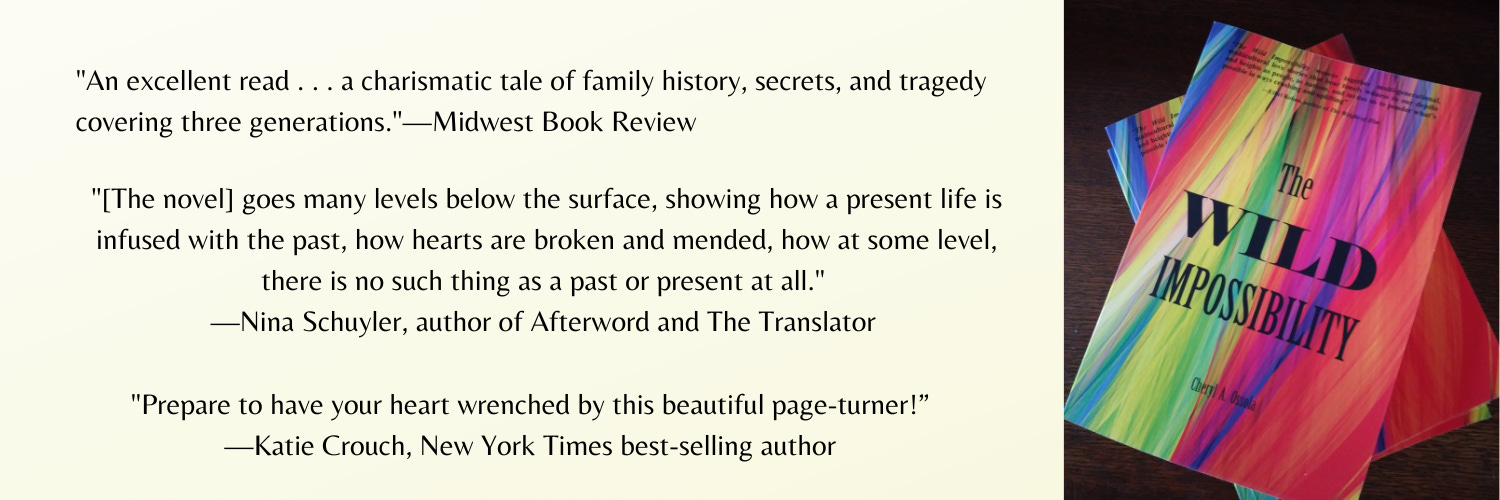
Which you can buy here or on the usual sites, or, better yet, order it from your local bookstore. Another fab option is to ask your library to stock it. If you read it and like it, please tell your friends and/or leave a few lines of praise on any bookish site. You’d be surprised how much a rating or review helps authors. Baci!
Watch the terrific French film Farewell, My Queen for a palace servant’s view of the start of the Revolution.
Wikipedia also says that due to Maxim’s popularity, Franz Lehar set the third act of his operetta The Merry Widow there.
Evviva per il tuo libro secondo!!🙌
As for godersi…. Oops! 😆
Congratulations on the publishing news but I have to share my own experience with a small press rushing me to publication...
I was pleased my book would come out so quickly and I loved my editor (I am an.editor so that's such a huge thing) but we missed a lot of pre-publication press because of the accelerated timeline.
Make sure your publisher has ARCs in May or June for the big pre-publication reviewers like Library Journal, Kirkus, Foreword, etc., as many of the reviewers want the book 4 to 6 months in advance.
Best of luck!